Editor’s Note: Ever feel like the Academy Awards got it wrong in a best picture choice? Freeline Media critic Milan Paurich looks back at two popular films from 1973 that got a very different response from the Oscars: one didn’t even get nominated for best picture, while the other one actually snagged that award. Which one actually deserved the win? Read on!
Paper Moon vs. The Sting
There’s something almost too perfect about The Sting and Paper Moon arriving within months of each other in 1973. Both are Depression-era stories about people who survive by lying, cheating and improvising. Both turn con artists into movie stars. Both are nostalgic for a vanished America. Both are, in their very different ways, about the elaborate theater of getting through hard times.
And yet the two films couldn’t be more different about what “theater” means.
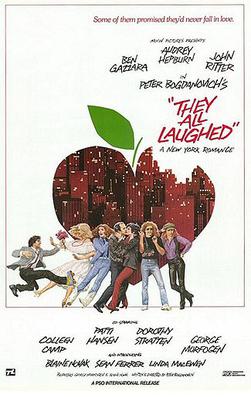
George Roy Hill’s The Sting is a fantasy of the American con: elegant, reassuring and beautifully constructed. Peter Bogdanovich’s Paper Moon is the real thing — or, at least something that feels closer to the American experience as it was actually lived. In The Sting, the con is a game whose pleasures are ultimately shared by the audience and the players. In Paper Moon, it’s work and how people eat.
That’s why the duo, which initially seemed like kissing cousins, have come to look like opposing statements about the national character.
The Sting was released at exactly the moment when Hollywood had discovered that the past could be both commercially useful and emotionally comforting. The 1936 setting allows Hill to wrap a thoroughly modern entertainment around the reassuring tropes of an old-fashioned genre picture: title cards, iris shots, period illustrations, Scott Joplin’s ragtime, Art Deco typography and a story built around a gigantic confidence game. It isn’t simply telling us a Depression story, it’s recreating the sensation of going to the movies during the Depression. The trick is almost subliminal; we’re being conned, too.
Paul Newman and Robert Redford are the ideal instruments. As Henry Gondorff, Newman is the older professional whose enormous confidence makes every room seem like his private stage. Redford’s Johnny Hooker is the young apprentice, cocky enough to be dangerous and naïve enough to still need schooling. Their chemistry supplies the film with its buddy picture heartbeat while Robert Shaw’s Doyle Lonnegan provides the villainous money and muscle necessary to make the elaborate scheme matter.
But the movie’s deepest pleasure isn’t whether the con will work, it’s that we’re allowed to believe in a world where a con this beautiful should work. The great con in The Sting isn’t merely the long game played on Lonnegan. It’s the fantasy that American ingenuity can always find a loophole in American power.
That fantasy was especially potent in 1973. Watergate was exposing the machinery of political deception; the postwar consensus had begun to look distinctly shabby; and Vietnam had made official assurances difficult to take at face value. The American public was discovering that institutions could lie with extraordinary confidence. And along comes a film in which lying isn’t a moral catastrophe but an art form. The irony is priceless.
The Sting doesn’t challenge deception so much as democratize it. The bad man cheats, the good men cheat, the audience watches everyone cheat and somehow the whole thing becomes an affirmation of ingenuity. The movie says: Yes, everybody is running a con. But wouldn’t you rather be on the side with the better script? Its enormous popularity — and Academy Award sweep, including Best Picture — suggested that audiences were more than happy to accept the bargain.
Paper Moon uses many of the same ingredients, but Bogdanovich removes almost all of the cushioning. The Depression isn’t a whimsical period setting, it’s everywhere. In the shabby towns, the cheap motels, the gas stations, the roadside diners, the people who have so little money that even a few dollars can become a matter of life and death.
Ryan O’Neal’s Moses Pray is a con man, but he doesn’t possess Gondorff’s theatrical grandeur. Moses is a small-timer. He sells Bibles to recently bereaved widows by exploiting their grief. He takes advantage of people’s assumptions and lies because lying pays.
When Tatum O’Neal’s Addie Loggins enters the picture, the film instantly turns into something stranger. Addie may be a child, but she’s hardly innocent.
She’s already learned the essential American lesson: nobody is going to take care of you unless you figure out how to take care of yourself. Her intelligence isn’t cute in the conventional “Movie Kid” sense, it’s economically useful. She understands Moses almost immediately, and understands the rules of his profession better than he realizes.
The great joke of Paper Moon is that the adult con man keeps underestimating the kid because he thinks being grown-up gives him an advantage. It doesn’t.
The relationship between Moses and Addie is consequently more complicated than the sentimental father-daughter story it might have been in another movie. They’re partners before they’re family, adversaries before they become friends. Each is constantly testing the other. Their affection emerges not because they become morally better people but because they discover that they’re better together.
That’s a very Bogdanovich idea: love expressed through behavior rather than declarations.
He also understands something that Hill’s romp doesn’t need to understand: a con artist’s greatest asset isn’t confidence, it’s observation.
Moses watches people; Addie watches Moses watching people; and Bogdanovich watches all of them.
Laszlo Kovacs’ black-and-white cinematography gives the film the visual authority of a Walker Evans photograph without turning the past into a museum piece. The road seems endless; the towns seem temporary; everybody appears to be passing through. The Depression becomes not a historical period but a condition of movement. This is where Paper Moon becomes quietly radical.
The movie refuses to romanticize poverty while nevertheless finding beauty in the lives of poor people. That sounds simple, but it isn’t.
Hollywood has always had a weakness for picturesque deprivation. Give people old clothes, battered cars, a dusty road and suddenly hardship can look charming. Paper Moon comes close to that template but repeatedly pulls away. Moses and Addie aren’t lovable because they’re poor. They’re lovable because they’re smart, funny, stubborn and occasionally decent — and because, despite themselves, they begin to need each other.
The difference between them can be reduced to their respective economies of scale. The Sting is about a gigantic con involving a gangster and a horse-racing racket. Its pleasures expand outward. Sets get bigger. Schemes become more elaborate. The con itself becomes a machine.
Paper Moon is about a man selling $5 Bibles.
Yet somehow the “smaller” movie feels more economically truthful.
That isn’t to diminish The Sting: Hill’s achievement remains formidable. His film is nearly perfect at what it wants to do. Its pleasures are so precisely calibrated that calling it merely slick would be unfair: it’s a great piece of popular moviemaking because it understands that entertainment can be architecture.
But Paper Moon understands something more intimate: entertainment can also be camouflage. People don’t con because life is fun, they con because life is difficult.
That distinction is the difference between the two films.
There’s another curious connection between them. Both are products of the New Hollywood’s fascination with the past, but they approach nostalgia from opposite directions.
The Sting looks backward and reconstructs the pleasure of looking backward. It’s nostalgia as performance.
Paper Moon looks backward and finds people who couldn’t afford nostalgia.
That makes Bogdanovich’s movie closer to the New Hollywood films surrounding it. For all its period trappings, Paper Moon belongs to the same cultural moment as The Last Picture Show, American Graffiti, Badlands and McCabe and Mrs. Miller: movies fascinated by the American past precisely because the American present had become increasingly difficult to believe in.
Bogdanovich’s genius was that he could make an old-fashioned film without pretending the old-fashioned world was ever innocent.
That’s why Paper Moon has aged so beautifully.
The Sting, meanwhile, remains a marvelous artifact of a different American impulse: the desire to believe that cleverness can beat corruption. Perhaps that’s why its final trick is so satisfying. The audience isn’t merely surprised, we’re relieved. The con works; the bad guy loses; the heroes walk away and the elaborate machinery clicks into place.
The world may be crooked, but somebody clever enough can still straighten it out.
Paper Moon offers no such guarantee. Its final moments are tender precisely because they’re so uncertain. Moses and Addie don’t suddenly become respectable, or receive some sentimental blessing from the universe. They only have the road, the car and each other.
And that may be its deepest American insight: survival isn’t always triumph. Sometimes it’s simply finding somebody with whom you can keep moving.
That’s why these two movies, released in the same remarkable year, make such a fascinating double bill. One turns the American con into a glorious piece of entertainment; the other turns it into a fact of life.
Hill gives us the con we want to believe in.
Bogdanovich gives us the con we recognize.
Hollywood rewarded the con it wanted to believe in, but Bogdanovich gave us the con America actually lived by.
Movie-crazy from an early age, Milan Paurich grew up in Northeastern Ohio at the tail end of the Movie Palace era. Some of his earliest memories involve sitting in the balconies of downtown “Cathedrals of Cinema” and watching Mary Poppins, In Search of the Castaways, and The Three Stooges Go Around the World in a Daze for the first time. Milan ultimately took his incipient cinephilia to New York University, where he graduated with a double major in Cinema Studies and Journalism. He has been a professional film critic for several decades at daily newspapers, alt-weeklies, and on television. Milan also won three S.P.J. (Society of Professional Journalists) awards as “Best Critic in Ohio.” Updated weekly, his MIX 98.9 film and home video reviews appear online here: https://movieswithmilanmix989.com/.